પસંદ કરેલી કૃતિ · selected work
જળકમળ છાંડી જાને બાળા
Leave the Water-Lotus and Go, O Child
Narsinh Mehta, Adi Kavi · c. 1450
જળકમળ છાંડી જાને બાળા, સ્વામી અમારો જાગશે
જાગશે, તને મારશે, મને બાળહત્યા લાગશે
કહે રે બાળક તું મારગ ભૂલ્યો, કે તારા વેરીએ વળાવિયો
નિશ્ચે તારો કાળ જ ખૂટ્યો, અહીંયા તે શીદ આવિયો
નથી નાગણ હું મારગ ભૂલ્યો, નથી મારા વેરીએ વળાવિયો
મથુરા નગરીમાં જુગટુ રમતાં, નાગનું શીશ હું હારિયો
રંગે રૂડો, રૂપે પૂરો, દિસંતો કોડિલો કોડામણો
તારી માતાએ કેટલા જન્મ્યા, તેમાં તું અળખામણો
મારી માતાએ બે જન્મ્યા, તેમાં હું નટવર નાનડો
જગાડ તારા નાગને, મારું નામ કૃષ્ણ કાનુડો
લાખ સવાનો મારો હાર આપું, આપું તુજને દોરિયો
આટલું મારા નાગથી છાનું, આપું તુજને ચોરિયો
શું કરું નાગણ હાર તારો, શું કરું તારો દોરિયો
શાને કાજે નાગણ તારે, કરવી ઘરમાં ચોરિયો
ચરણ ચાંપી મૂછ મરડી, નાગણે નાગ જગાડિયો
ઉઠોને બળવંત કોઈ, બારણે બાળક આવિયો
બેઉ બળિયા બાથે વળગ્યા, કૃષ્ણે કાળીનાગ નાથિયો
સહસ્ર ફેણ ફૂંફવે, જેમ ગગન ગાજે હાથિયો
નાગણ સૌ વિલાપ કરે, નાગને બહુ દુ:ખ આપશે
મથુરા નગરીમાં લઈ જશે, પછી નાગનું શીશ કાપશે
બેઉ કર જોડી વિનવે સ્વામી, મુકો અમારા કંથને
અમે અપરાધી કાંઈ ન સમજ્યાં, ન ઓળખ્યાં ભગવંતને
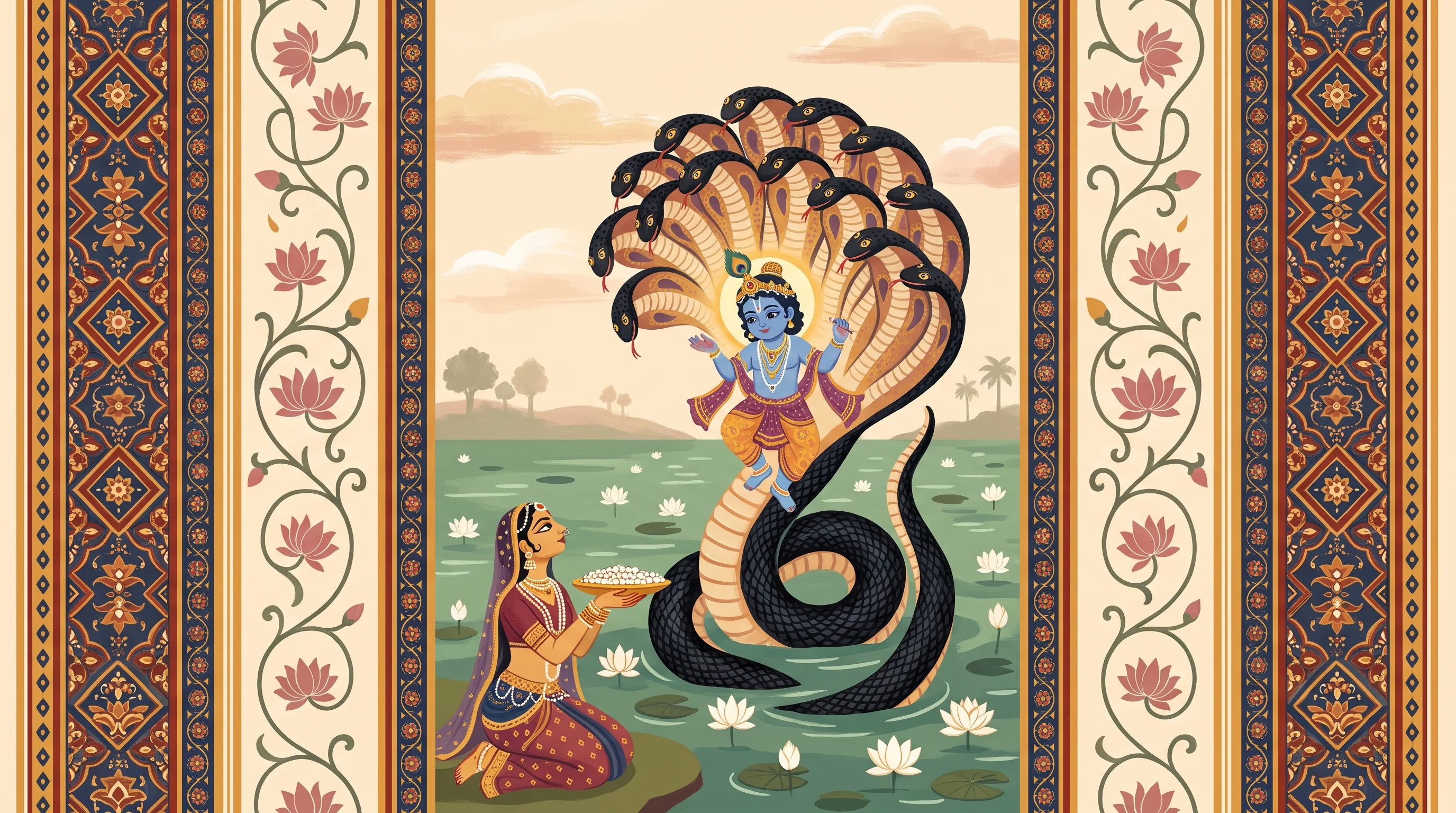
થાળ ભરીને મોતીડે, નાગણે કૃષ્ણ વધાવિયો
નરસૈંયાના નાથ પાસેથી, નાગણે નાગ છોડાવિયો
This is the Kaliya-daman — the taming of the serpent Kaliya from the Bhagavata Purana, in which the child Krishna leaps into a poisoned pool of the Yamuna and dances the many-hooded black snake into submission. But Narsinh Mehta, writing in the fifteenth century as the founding poet of the Gujarati language, refuses to tell it as cosmic spectacle. He opens instead on the serpent's frightened wife, the નાગણ, who mistakes God for a lost boy and pleads with him to leave before her husband wakes: જળકમળ છાંડી જાને બાળા, સ્વામી અમારો જાગશે — "leave the water-lotus and go, child; my lord will wake." Her fear is entirely domestic and entirely misplaced; she believes she is shielding a stray child from a monster, not knowing the child is divine and the monster is doomed. The dramatic irony carries the whole poem.
Almost the entire piece is built as samvad, rapid dialogue. The wife warns; Krishna answers with unnerving calm that he has not lost his way — મથુરા નગરીમાં જુગટુ રમતાં, નાગનું શીશ હું હારિયો — he lost the serpent's head in a dice game at Mathura, and has come to collect his winnings. When she tries to bribe him with a necklace and cord to slip away unseen, "a theft hidden from my husband," he refuses in kind. Only then does she wake the snake, pressing his feet and twisting his whiskers — ચરણ ચાંપી મૂછ મરડી — and the battle detonates in two lines: the thousand hoods hiss જેમ ગગન ગાજે હાથિયો, like an elephant trumpeting until the sky roars. The folk diction is vivid and affectionate — Krishna calls himself નટવર નાનડો, the little dancer-boy, and કૃષ્ણ કાનુડો, Krishna the darling — collapsing the distance between the terrible god and the neighbourhood child.
The arc bends from fear to recognition to sharanagati, surrender, the very heart of bhakti. The naginis fold their hands — અમે અપરાધી કાંઈ ન સમજ્યાં, ન ઓળખ્યાં ભગવંતને, "we are offenders, we did not recognise the Lord" — and the wife who once offered pearls to smuggle Krishna out now heaps a platter of pearls to worship him: થાળ ભરીને મોતીડે, નાગણે કૃષ્ણ વધાવિયો. The closing line stamps the poem with Narsinh's signature chhap, નરસૈંયાના નાથ, the Lord of Narsaiyo — the only authorship mark on a song he never wrote by hand, transmitted orally for five centuries. Long a fixture of Gujarati school textbooks and a prabhat and Janmashtami standard, it remains one of the most widely memorised poems in the language, and modern listeners increasingly hear an ecological plea in it too — Krishna cleansing a poisoned river — though that reading is a contemporary overlay on Narsinh's devotional design.
નરસિંહ મહેતા
Narsinh Mehta, revered as the *Adi Kavi* (First Poet) of Gujarati literature, was a 15th-century poet-saint whose devotional verses defined the bhakti tradition in Gujarat. Born into a Nagar Brahmin family in Junagadh, his life became legend — stories of his unwavering devotion to Krishna, his defiance of caste conventions, and his miraculous encounters became inseparable from his poetry. His most famous work, *Vaishnav Jan To*, became Mahatma Gandhi's favourite hymn and an anthem of the Indian independence movement five centuries after it was written.
All poems by Narsinh Mehta →