પસંદ કરેલી કૃતિ · selected work
અખિલ બ્રહ્માંડમાં
The Whole Universe Is You
Narsinh Mehta, Adi Kavi · c. 1450
અખિલ બ્રહ્માંડમાં એક તું શ્રીહરિ
જૂજવે રૂપે અનંત ભાસે
દેહમાં દેવ તું, તેજમાં તત્વ તું
શૂન્યમાં શબ્દ થઈ વેદ વાસે
પવન તું, પાણી તું, ભૂમિ તું, ભૂધરા
વૃક્ષ થઈ ફૂલી રહ્યો આકાશે
વિવિધ રચના કરી અનેક રસ લેવાને
શિવ થકી જીવ થયો એ જ આશે
વેદ તો એમ વદે, શ્રુતિ-સ્મૃતિ શાખ દે
કનક કુંડલ વિષે ભેદ ન હોયે
ઘાટ ઘડિયા પછી નામરૂપ જૂજવાં
અંતે તો હેમનું હેમ હોયે
ગ્રંથ ગરબડ કરી, વાત નવ કરી ખરી
જેહને જે ગમે તેને પૂજે
મન-વચન-કર્મથી આપ માની લહે
સત્ય છે એ જ મન એમ સૂઝે
વૃક્ષમાં બીજ તું, બીજમાં વૃક્ષ તું
જોઉં પટંતરો એ જ પાસે
ભણે નરસૈંયો એ મન તણી શોધના
પ્રીત કરું, પ્રેમથી પ્રગટ થાશે
Composed in the mid-fifteenth century, Akhil Brahmand Ma is Narsinh Mehta at his most philosophically ambitious. Where Vaishnav Jan To defines the ideal devotee through ethical conduct, this poem turns inward to ask a deeper question: what is the nature of the divine itself? The answer unfolds across five stanzas of escalating wonder — God is not above the world but woven into its fabric, present in wind and water, body and light, the void where the Vedas hum into existence.
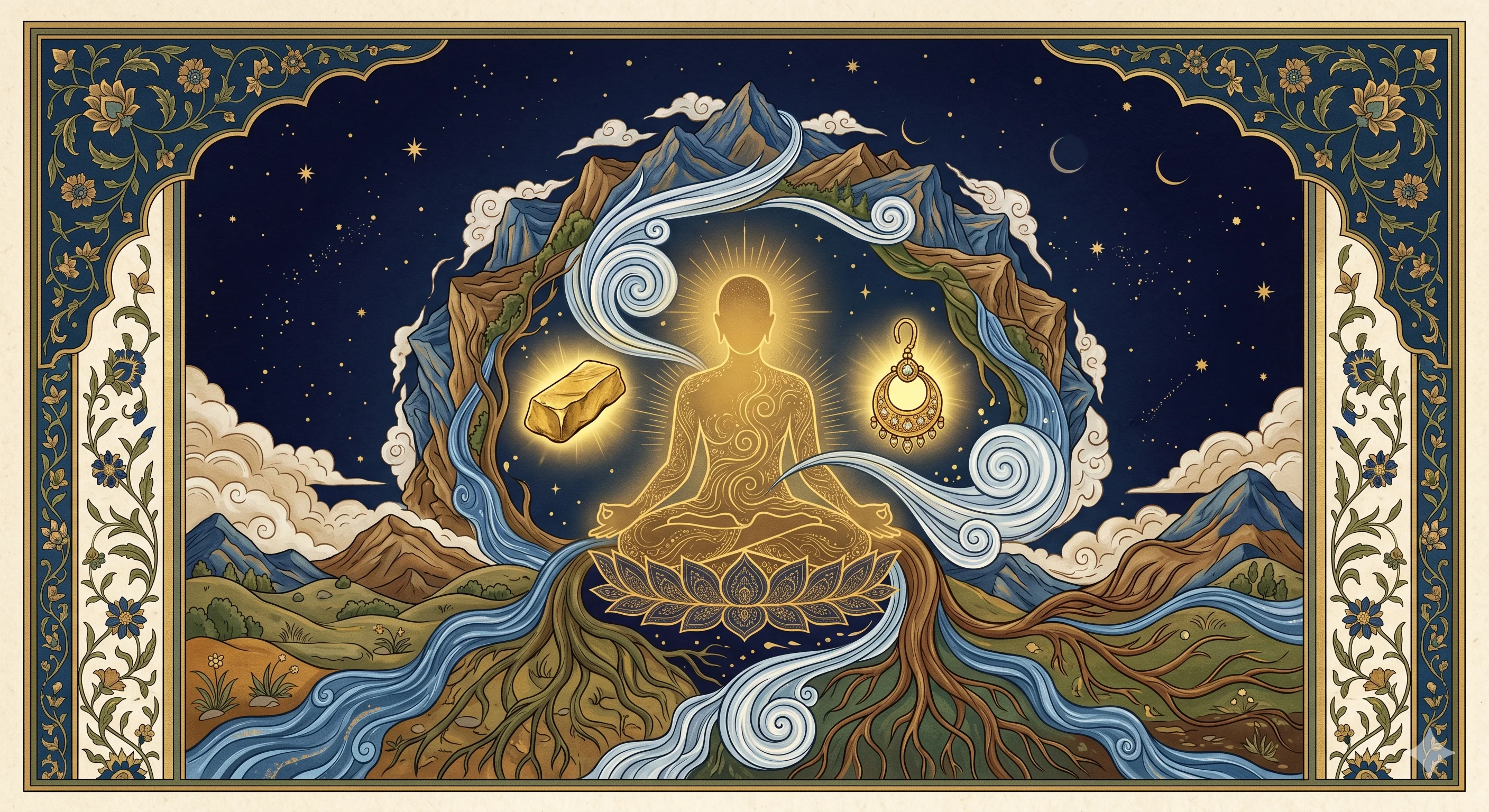
The poem's intellectual centrepiece is the kanak-kundal metaphor in the third stanza: gold fashioned into an earring is still gold; names and forms are mere shapes hammered onto a single, undifferentiated substance. This is classical Advaita Vedanta — the philosophy of non-duality — rendered not in the dense Sanskrit of Shankaracharya's commentaries but in the sung Gujarati of a Junagadh poet-saint. The final stanza completes the circle with a paradox that rivals any Zen koan: the tree is in the seed, the seed is in the tree, and in that infinite recursion, the seeker finds the sought. Preet karoo, premthi pragat thashe — love, and love will make the hidden visible.
This pada has been sung in temples, homes, and satsangs across Gujarat for over five centuries, its philosophical depth never diminishing its musical accessibility. It stands alongside Vaishnav Jan To as one of the twin pillars of Narsinh Mehta's legacy — one defining how to live in the world, the other revealing what the world truly is.
નરસિંહ મહેતા
Narsinh Mehta, revered as the *Adi Kavi* (First Poet) of Gujarati literature, was a 15th-century poet-saint whose devotional verses defined the bhakti tradition in Gujarat. Born into a Nagar Brahmin family in Junagadh, his life became legend — stories of his unwavering devotion to Krishna, his defiance of caste conventions, and his miraculous encounters became inseparable from his poetry. His most famous work, *Vaishnav Jan To*, became Mahatma Gandhi's favourite hymn and an anthem of the Indian independence movement five centuries after it was written.
All poems by Narsinh Mehta →