પસંદ કરેલી કૃતિ · selected work
પંખીડાને
To the Little Birds
Kalapi, Saurashtra's Prince-Poet · c. 1895
રે પંખીડા! સુખથી ચણજો, ગીત વા કાંઈ ગાજો;
શાને આવા મુજથી ડરીને ખેલ છોડી ઊડો છો?
પાસે જેવી ચરતી હતી આ ગાય, તેવો જ હું છું;
ના, ના, કો દી તમ શરીરને કાંઈ હાનિ કરું હું.
ના પાડી છે તમ તરફ કૈં ફેંકવા માળીને મેં;
ખુલ્લું મારું ઉપવન સદા પંખીડાં સર્વને છે.
રે રે! તોયે કુદરતથી મળી ટેવ બીવા જનોથી;
છો બીતાં તો મુજથી પણ સૌ ક્ષેમ તેમાં જ માની.
જો ઊડો તો જરૂર ડર છે, ક્રુર કો હસ્તનો હા!
પાણો ફેકેં તમ તરફ રે! ખેલ એ તો જનોના.
દુ:ખી છું કે કુદરત તણા સામ્યનું ભાન ભૂલી;
રે રે! સત્તા તમ પર જનો ભોગવે ક્રુર આવી.
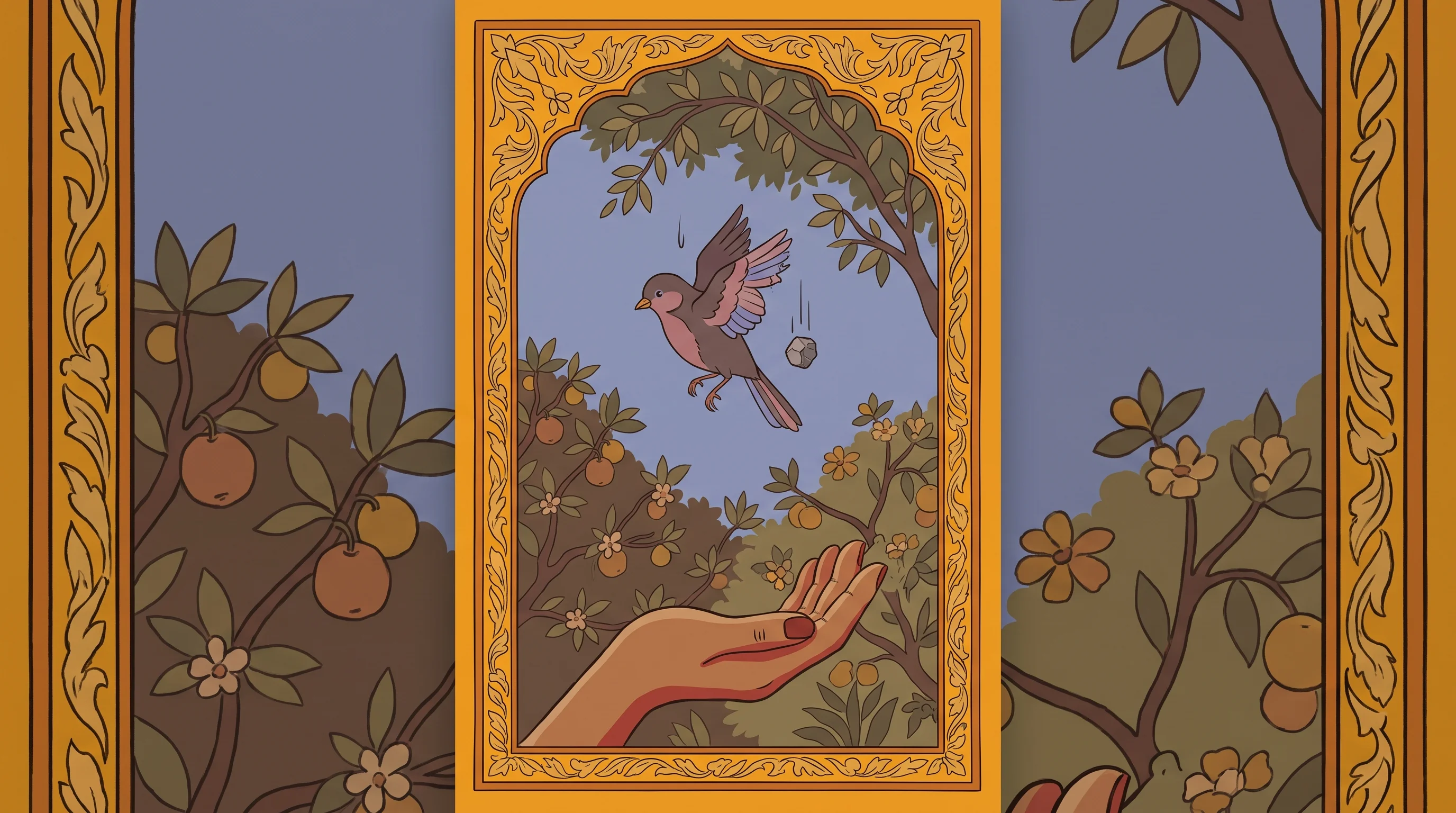
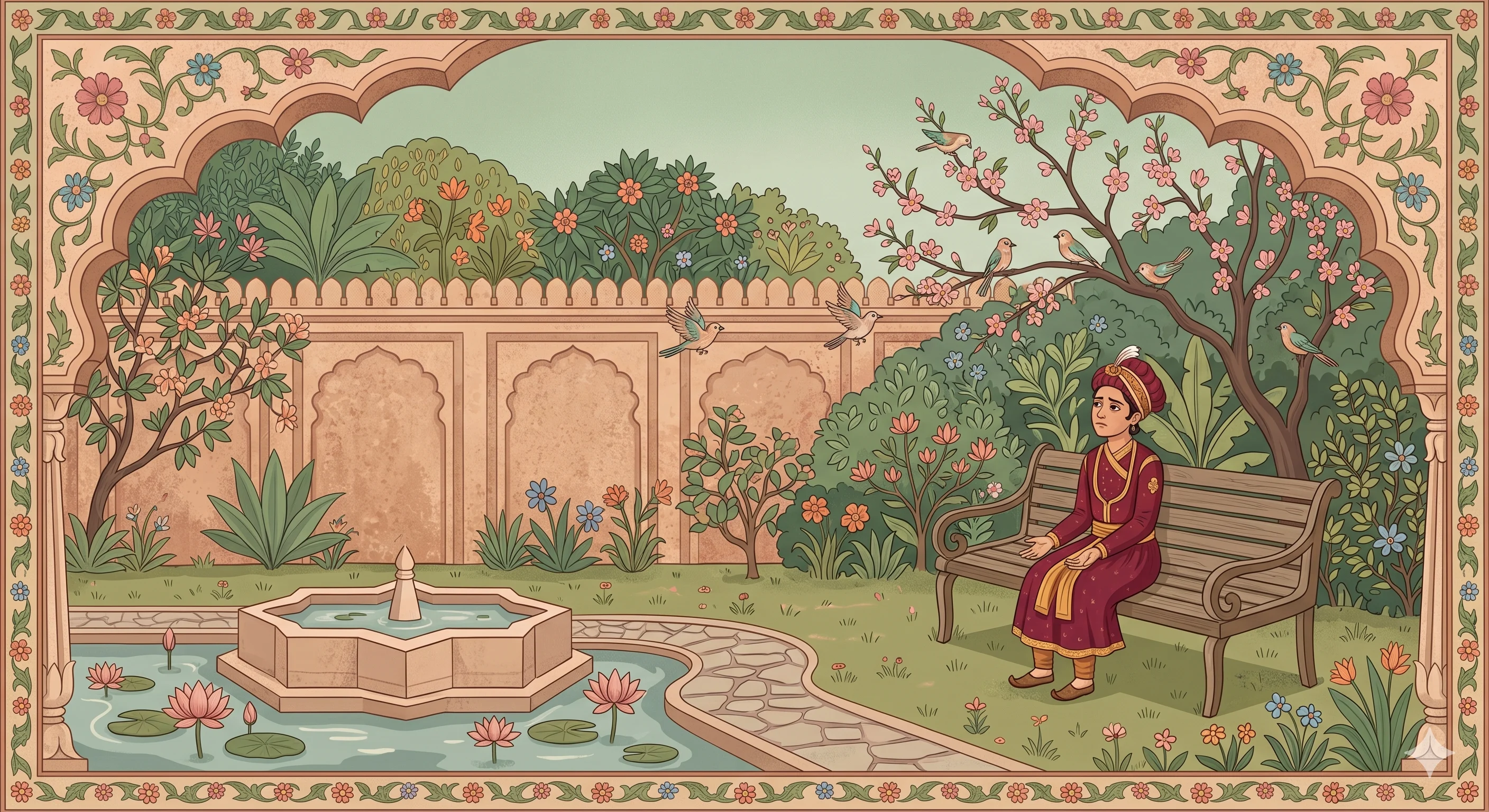
This poem captures a small, precise moment — a man in a garden watches birds scatter at his approach — and turns it into a meditation on the broken covenant between humanity and the natural world. Kalapi, the prince of Lathi, wrote from within the paradox of his own position: a ruler with power over subjects and land, pleading with sparrows to trust him. The opening plea 'રે પંખીડા! સુખથી ચણજો' (O little birds, peck in peace) carries the weight of someone who understands that gentleness is not enough when your species has a history of stones.
The poem's emotional architecture is deceptively simple. The first stanza reassures — I am like the cow grazing beside you, I will not harm you. The second concedes — I have told the gardener not to throw things, yet you fear me anyway, and perhaps you are wise to do so. The third stanza breaks open into grief: 'દુ:ખી છું કે કુદરત તણા સામ્યનું ભાન ભૂલી' — I am sorrowful that humans have forgotten nature's equality. Written in mandakranta metre, each line unfolds with the measured grace of a Sanskrit shloka, lending philosophical gravity to what might otherwise read as pastoral whimsy.
Kalapi composed this in his garden at Lathi in the 1890s, barely into his twenties, and it has since become one of the most recited Gujarati poems in schools across Gujarat. Its enduring appeal lies in its refusal to sentimentalise — the poet does not pretend he can undo centuries of human cruelty with kind words. He simply bears witness to the damage, and in that honesty, finds something more powerful than reassurance.
કલાપી
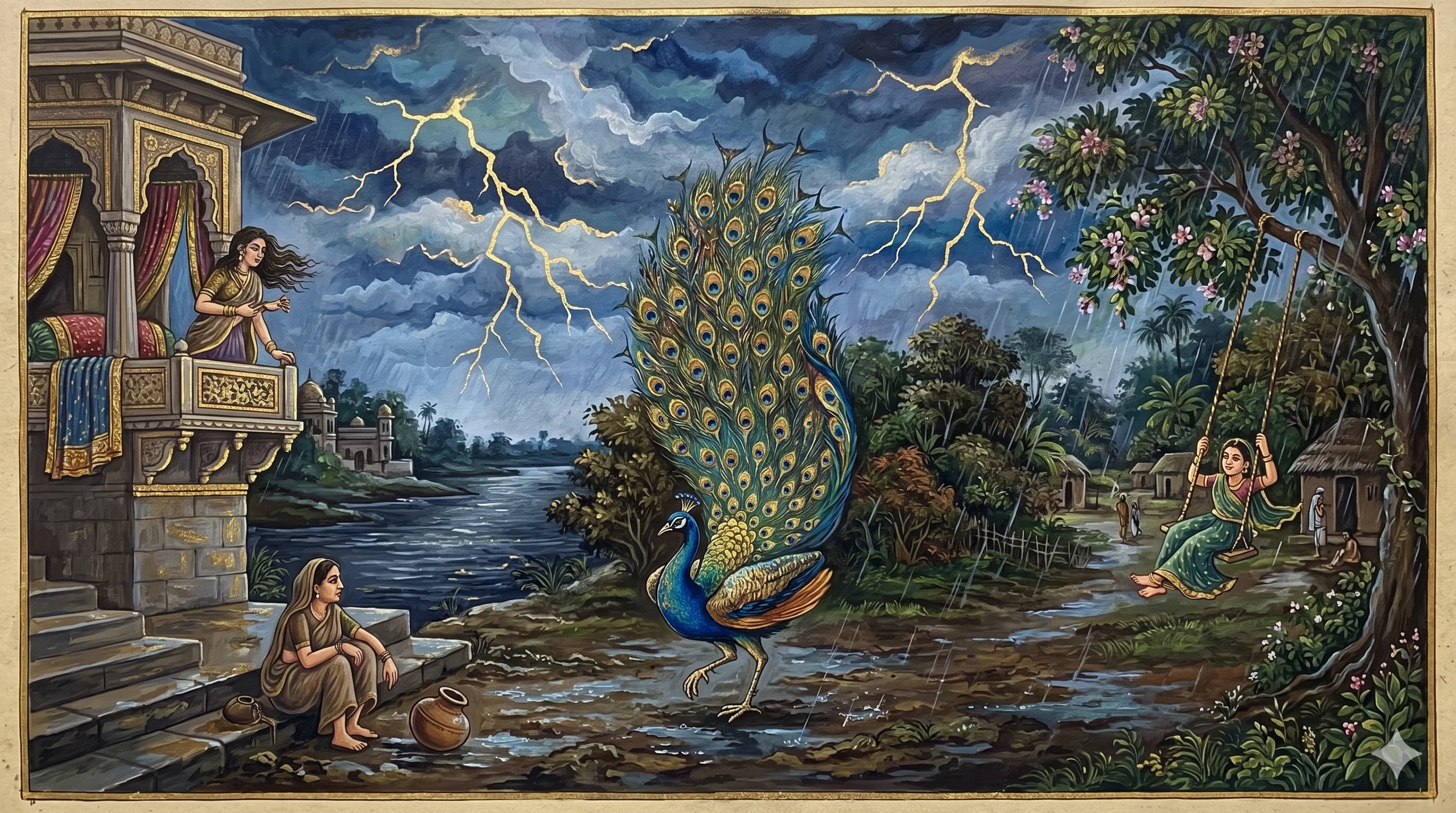
Kalapi — the pen name of Sursinhji Takhtasinhji Gohil, Thakore Saheb of the small princely state of Lathi — was a poet who lived like a verse: beautiful, intense, and heartbreakingly brief. His name means "peacock," and his poetry carried the same quality of extravagant, melancholic beauty. In just twenty-six years of life, he produced a body of romantic and philosophical verse that redefined Gujarati poetry, moving it away from didacticism toward raw emotional truth. Deeply influenced by English Romantic poets — particularly Keats and Shelley — he fused Western lyric forms with Gujarati sensibility, writing with an intimacy that shocked and captivated his contemporaries. His tragic early death in 1900 only deepened the legend, making him one of the most mythologized figures in Gujarati literary history.
All poems by Kalapi →