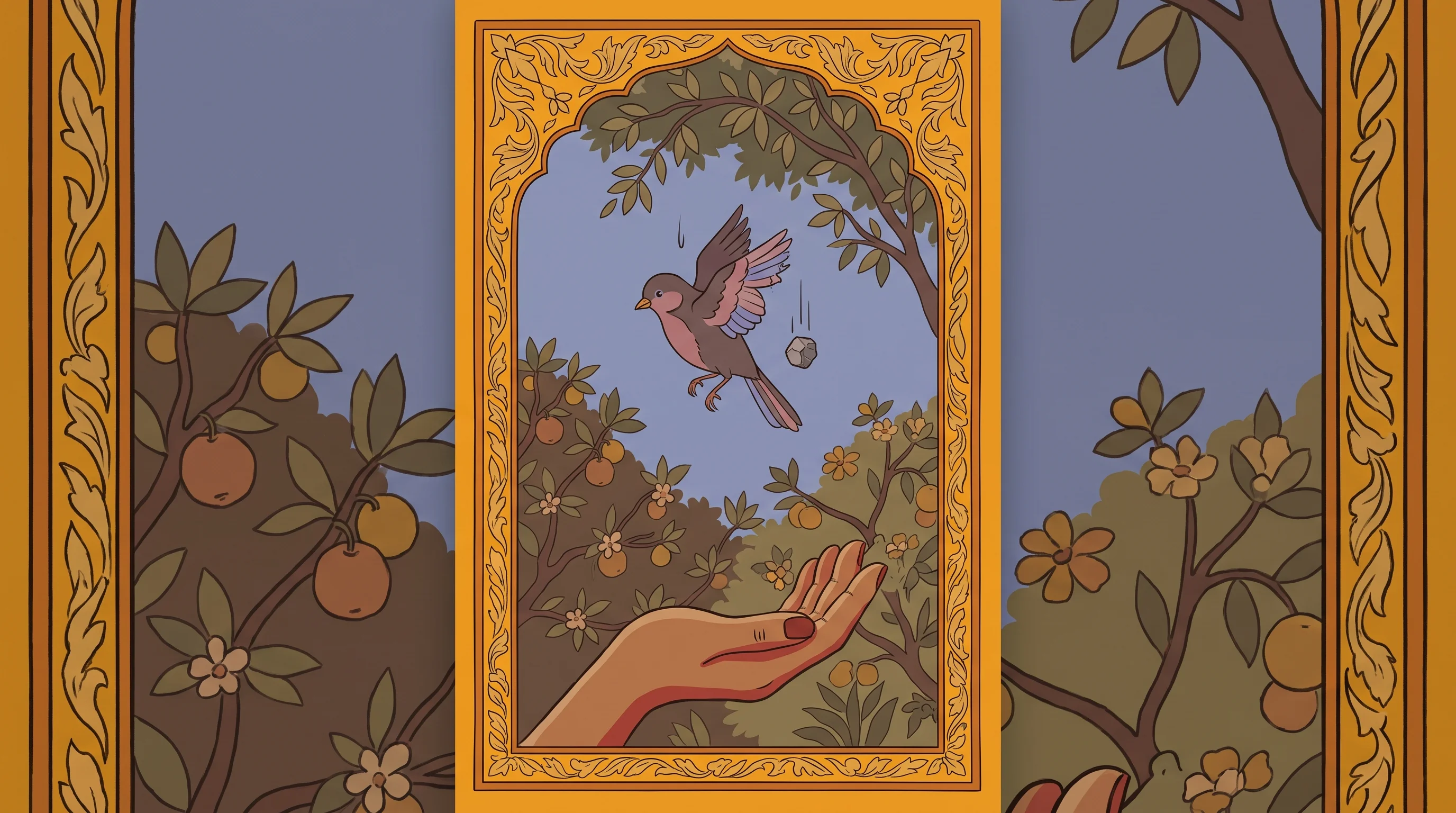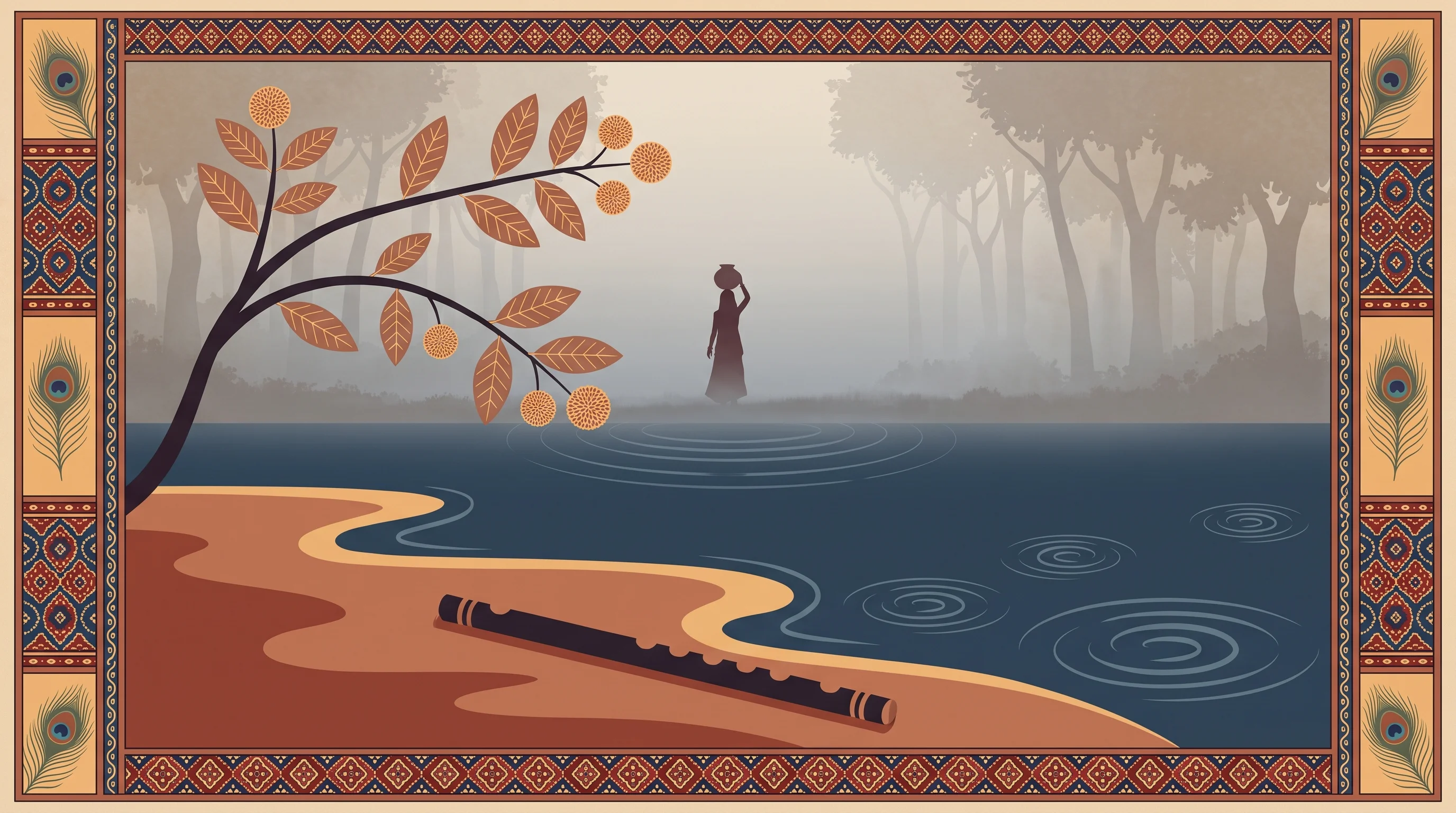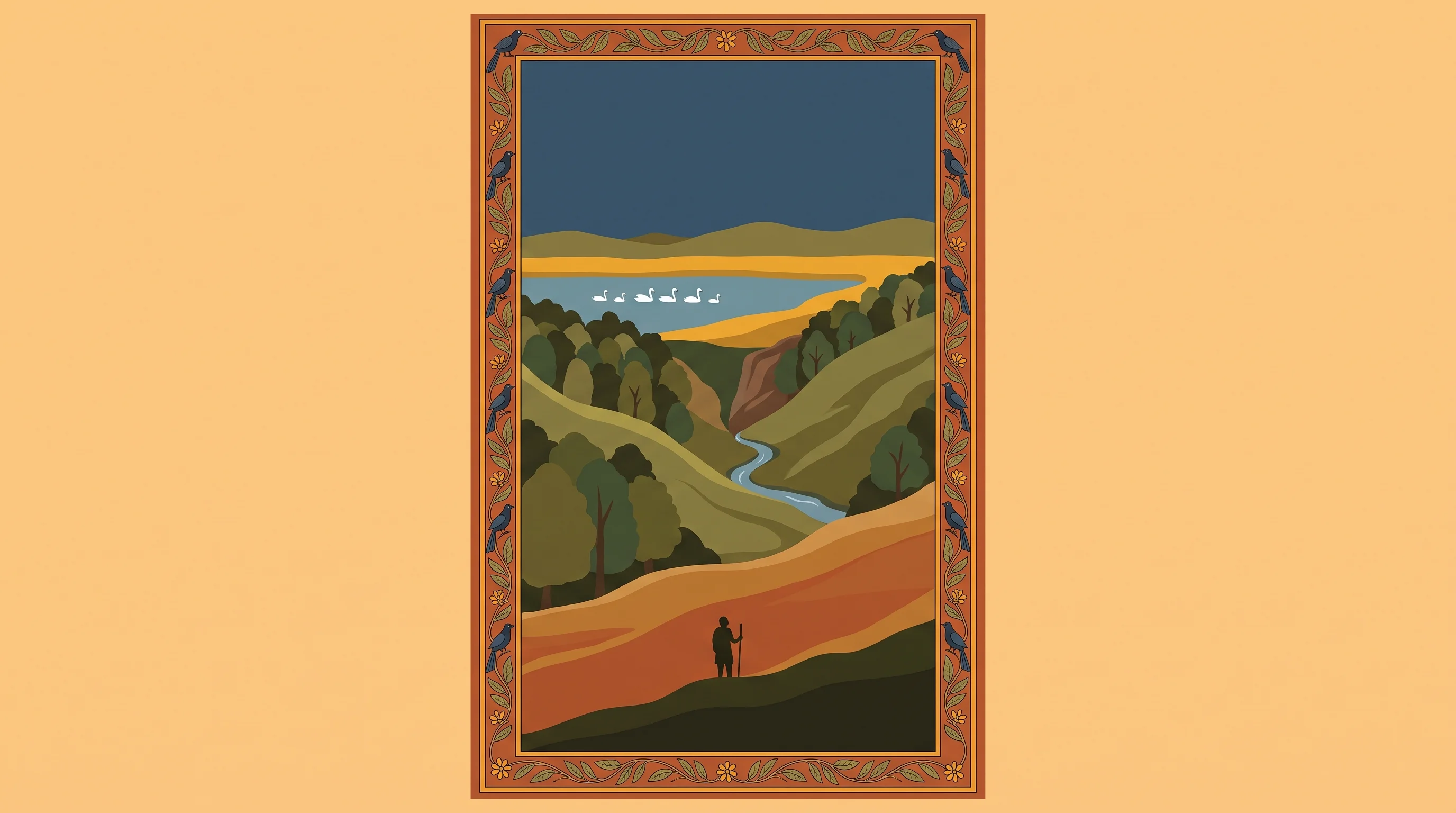
ભોમિયા વિના મારે ભમવા'તા ડુંગરા,
જંગલની કુંજ કુંજ જોવી હતી;
જોવી'તી કોતરો ને જોવી'તી કંદરા,
રોતાં ઝરણાંની આંખ લ્હોવી હતી.
સૂના સરવરિયાની સોનેરી પાળે
હંસોની હાર મારે ગણવી હતી;
ડાળે ઝૂલંત કોક કોકિલાને માળે
અંતરની વેદના વણવી હતી.
એકલા આકાશ તળે ઊભીને એકલો,
પડઘા ઉરબોલના ઝીલવા ગયો;
વેરાયા બોલ મારા, ફેલાયા આભમાં,
એકલો અટૂલો ઝાંખો પડ્યો.
આખો અવતાર મારે ભમવા ડુંગરિયા,
જંગલની કુંજ કુંજ જોવી ફરી;
ભોમિયા ભૂલે એવી ભમવી રે કંદરા,
અંતરની આંખડી લ્હોવી જરી.
Written around 1932 for Gangotri (1934), the collection that announced Umashankar Joshi as a major new voice, Bhomiya Vina is the song of a young man who wants only to disappear into the hills. A bhomiyo is a local guide, someone who knows every ravine and ford of the land — and to wander ભોમિયા વિના, "without a guide," is to refuse that safety, to want the wilderness unmediated and alone. The opening couplet lays out the desire plainly: ભોમિયા વિના મારે ભમવા'તા ડુંગરા, જંગલની કુંજ કુંજ જોવી હતી — I longed to roam the hills with no guide, to see every grove of the forest. What follows is a catalogue of tender, impossible wishes: to wipe the eyes of the weeping streams (રોતાં ઝરણાંની આંખ લ્હોવી), to count the rows of swans on a lonely lake's golden bank, to weave the heart's ache into a cuckoo's nest.
The poem's quiet engineering is grammatical. Almost every line closes on the past-desiderative — જોવી હતી, ગણવી હતી, વણવી હતી ("I had wanted to see, to count, to weave") — so that the whole lyric hums with longing for things that never happened. Joshi's diction is soft, alliterative, and deeply rooted in spoken Gujarati (સૂના સરવરિયાની સોનેરી પાળે), giving the crafted lyric the lilt of folk song while nature itself comes alive: streams weep and have eyes to be wiped, the sky swallows the wanderer's words. The turn arrives in the third stanza, where the mood darkens. Standing alone beneath the open sky to catch the echoes of his own heart's cry, the speaker finds his words scatter and fade into the blue — વેરાયા બોલ મારા, ફેલાયા આભમાં, એકલો અટૂલો ઝાંખો પડ્યો — and he is left alone, forlorn, dimmed.
The final stanza answers that fading not with retreat but with a vow that swells to fill a whole lifetime: આખો અવતાર મારે ભમવા ડુંગરિયા — for my entire life let me wander the hills, roaming ravines so deep that even a guide would lose his way (ભોમિયા ભૂલે એવી ભમવી રે કંદરા), and wipe, if only a little, the inner eye (અંતરની આંખડી). Critics have long read the poem on two registers at once: a literal love of wandering in nature, and a spiritual allegory of the soul's solitary quest, the individual yearning toward the infinite with the inner eye as its instrument. Taught in Gujarati schools for generations and set to music many times over, Bhomiya Vina remains one of the language's best-loved lyrics — its opening line now a proverb for the free, unguided pull of the open hills.
ઉમાશંકર જોશી
Umashankar Joshi — poet, short-story writer, playwright, essayist, critic, editor and scholar — is one of the towering figures of modern Gujarati literature, often called a father-figure of its poetry. Born in the village of Bamna in Idar taluka, he came of age in the Gandhian era, joining the freedom movement as a student and serving time in jail during the civil-disobedience campaigns; his verse ever after fused lyric intimacy with social conscience. His first collection, *Gangotri* (1934), announced a major new voice, and the books that followed — *Nishith*, *Prachina*, *Aatithya*, *Vasant-varsha* — deepened it. In 1967 he became the first Gujarati writer to receive the Jnanpith Award, India's highest literary honour, for *Nishith*. For decades he edited the influential literary quarterly *Sanskriti*, served as Vice-Chancellor of Gujarat University and President of the Sahitya Akademi, and sat in the Rajya Sabha. His humanist credo lives in his most quoted line — *વ્યક્તિ મટીને બનું વિશ્વમાનવી*, "ceasing to be an individual, let me become a world-human."
All poems by Umashankar Joshi →